
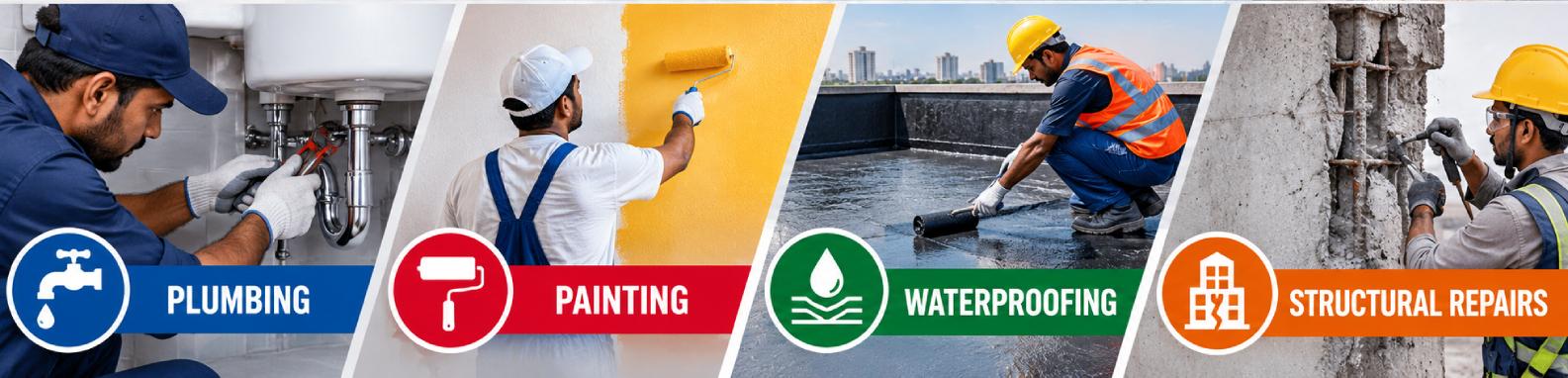
Maintaining a building in Mumbai requires more than occasional cleaning and a fresh coat of paint. Water leakage, deteriorating plumbing, damaged exterior surfaces and ageing concrete can affect everyday comfort, building appearance and long-term maintenance costs. For property owners and housing societies, understanding these problems is the first step towards arranging the right repairs.
Building plumbing services, building painting, waterproofing work and structural repairs are closely connected. A leaking pipe can damage plaster. Failed waterproofing can cause recurring dampness. Painting over a wet wall may produce an attractive finish initially, but the underlying problem can return. Similarly, visible concrete damage requires assessment before decorative work begins.
This guide explains the scope of these four services, common warning signs, the importance of proper work sequencing and practical considerations when selecting building maintenance contractors in Mumbai.
Why Regular Building Maintenance Matters in Mumbai
Mumbai buildings face exposure to seasonal rain, humidity, pollution and frequent use of shared facilities. Terraces, external walls, balconies, drainage lines and water supply systems need attention throughout the year. Older buildings may also have worn pipes, previous repairs and surfaces that have deteriorated gradually.
Small defects are often easier to investigate before they become widespread. A loose pipe connection, blocked rainwater outlet or damaged seal around a window can allow water to enter surrounding areas. If the source remains unresolved, repeated plastering and repainting may only add expense.
Planned maintenance helps housing societies identify priorities, compare contractor proposals and schedule work around residents’ needs. It also creates a record of repairs, materials and recurring complaints.
A useful maintenance approach considers the whole building. Instead of treating every stain or crack separately, owners should understand whether plumbing, drainage, waterproofing or concrete deterioration is contributing to the problem.
Building Plumbing Services in Mumbai
Plumbing is essential to the daily functioning of residential and commercial buildings. It includes water supply, drainage, sanitary connections and associated fittings. When these systems develop faults, residents may experience leakage, poor water pressure, slow drainage or repeated interruptions.
Professional building plumbing services in Mumbai should begin with an inspection of the reported issue and the connected system. Identifying the source is particularly important where pipes are concealed inside walls, shafts or floors.
Common Building Plumbing Problems
Typical plumbing complaints include dripping connections, leaking supply pipes, blocked waste lines, overflowing drains and uneven water pressure. In housing societies, shared vertical lines can create problems across several flats.
A ceiling stain in one apartment may originate from a pipe or bathroom above. However, the stain alone does not establish the cause. The contractor should distinguish between supply leakage, drainage leakage and failure of the surrounding waterproofing.
Other warning signs include persistent moisture near pipe shafts, frequent pump operation, visible corrosion on older metal pipes and repeated repairs at the same joint. Recurring problems deserve a broader inspection rather than another temporary patch.
Water Supply Pipe Repair and Replacement
Water supply work may involve replacing damaged sections, repairing connections, installing isolation valves or upgrading deteriorated distribution lines.
The choice of pipe material should consider its intended use, operating conditions, compatibility with existing connections and access for future maintenance. Selection should follow the relevant specifications and manufacturer instructions.
Before replacement begins, residents should receive clear information about shutdown timings. Completed work should undergo appropriate leakage and operational checks before concealed sections are closed.
Accessible isolation valves can make future repairs easier by allowing a specific section to be shut down without unnecessarily interrupting the entire building.
Drainage and Sanitary Plumbing Work
Drainage systems carry wastewater away from bathrooms, kitchens and other connected areas. Blockages, damaged joints and poorly functioning lines can cause slow discharge, leakage and unpleasant odours.
Building drainage repairs may include cleaning accessible lines, replacing damaged pipes, correcting defective connections and restoring inspection access.
Rainwater drainage also needs attention. Terrace outlets, balcony drains and downpipes should remain clear so water can discharge as intended. Cleaning should remove accumulated debris rather than push it further into the system.
For shared lines, the work plan should identify affected flats, access requirements and the sequence of repairs.
Preventive Plumbing Maintenance
Routine inspections can help detect visible leaks and recurring drainage issues before they become disruptive.
Housing societies can maintain a complaint register showing the location, date, suspected source and action taken. Repeated complaints at the same location may indicate an unresolved system defect.
Useful checks include accessible pipe joints, isolation valves, drainage access points, terrace outlets and previously repaired areas. Planned plumbing maintenance supports more reliable building operations and provides better information for future repair decisions.
Building Painting Services in Mumbai
Building painting improves appearance and forms part of maintaining exposed surfaces. A well-planned painting project can refresh a housing society, protect suitable substrates and create a consistent finish across the property.
The quality of the result depends on surface condition, preparation, product selection and application. Paint should be applied over a properly prepared surface, with existing leakage and significant defects addressed beforehand.
Exterior Building Painting
External walls are exposed to rain, sunlight, dirt and environmental conditions. Common signs that repainting may be needed include fading, peeling, chalking and uneven patches.
An exterior painting inspection should also identify loose plaster, damp areas, defective joints and damaged surfaces. These findings influence the repair scope and the coating system.
Surface preparation and moisture control are central to successful exterior work. Manufacturer guidance distinguishes waterproofing treatment from decorative paint and emphasises suitable preparation before coating.
For housing societies, exterior colour selection should consider the building’s architecture, surrounding properties and maintenance preferences. A sample patch helps residents assess the actual shade and finish before full application.
Interior and Common-Area Painting
Interior painting may cover individual apartments, offices, staircases, corridors, entrance lobbies and shared facilities.
Product selection should reflect the use of each area. Frequently touched walls may benefit from a suitable washable finish, while utility spaces may have different requirements.
Before painting, the contractor should inspect dampness, loose coatings, damaged plaster and surface contamination. Furniture, flooring, fittings and equipment need protection during preparation and application.
In occupied buildings, phased execution allows residents to continue using essential access routes. Clear notices about working areas, drying periods and temporary restrictions help reduce inconvenience.
Surface Preparation Before Painting
A painting quotation should explain what preparation is included. Depending on the surface, this may involve cleaning, removing loose coatings, repairing local plaster defects, treating suitable surface cracks and applying the specified primer.
Decorative fillers should not be used as a substitute for investigating cracks that may involve structural movement or concrete deterioration.
Drying periods, application conditions and coat intervals should follow the selected product instructions. Starting the next stage too early can affect the finished coating.
Good preparation may take considerable effort, but it gives the new finish a suitable base and reduces the likelihood of avoidable rework.
Comparing Building Painting Quotations
Comparing quotations only by the rate per square foot can be misleading. Contractors may have priced different preparation standards, products, access arrangements and repair quantities.
A clear proposal should state the measured area, coating system, number of coats, included repairs, exclusions and access method. It should also explain debris removal and protection of surrounding property.
Any warranty should be reviewed carefully. Coverage may depend on the specified system, application conditions and exclusions. Written terms are more useful than a general promise that the paint will last for a particular period.
Building Waterproofing Work in Mumbai
Waterproofing work aims to control water entry through relevant building surfaces, joints and details. Terraces, bathrooms, balconies, external walls, basements and water-retaining structures may require different approaches.
The most important starting point is diagnosis. Water can travel before appearing as a stain, so the visible damage may be some distance from the entry point.
Signs That Waterproofing Needs Attention
Common signs include recurring ceiling stains, damp patches after rainfall, peeling finishes, moisture around windows and leakage below bathrooms or terraces.
These symptoms can have several causes. A plumbing defect, blocked drain, failed seal or damaged waterproofing layer may produce similar visible effects.
The inspection should record when leakage occurs. Problems that appear during rainfall suggest different investigation priorities from those occurring whenever a bathroom is used.
Photographs, resident observations and previous repair records can help establish the pattern. Treatment should follow the identified cause rather than the stain alone.
Terrace Waterproofing Services
A terrace inspection should consider surface condition, drainage, ponding, parapet junctions, outlets, pipe penetrations and previous treatments.
Where waterproofing is required, the selected system should suit the substrate, expected exposure and intended use of the terrace. A surface with regular foot traffic may need protection appropriate to that use.
The proposal should describe preparation, local repairs, treatment at junctions, application requirements and any protective finish.
Waterproofing alone may not resolve drainage defects. Where water collects because of poor falls or obstructed outlets, the scope should address those conditions as appropriate.
Any water testing should be planned for the specific building and carried out under suitable technical supervision.
Bathroom and Balcony Waterproofing
Bathroom leakage may arise from damaged pipes, drain connections, joints or waterproofing below the finish. Applying sealant to visible tile joints may not resolve a concealed defect.
Inspection should establish whether local repairs are practical or whether finishes need removal to access the affected area.
Balconies require similar attention to drainage, floor-wall junctions, threshold details and pipe penetrations. The treatment should account for exposure and normal use.
Before finishes are reinstated, the contractor should complete the checks specified for the chosen repair system. Records of concealed work can help with future maintenance.
External Wall Waterproofing
External seepage may occur through damaged plaster, cracks, defective joints or gaps around openings. Wind-driven rain can make some elevations more vulnerable than others.
Inspection should include window perimeters, service penetrations and previously repaired patches. The treatment may involve repairing specific defects and applying a compatible waterproofing system where appropriate.
Exterior painting and waterproofing should be coordinated, but they serve different purposes. The selected products need to work together as a specified system.
Surface condition, drying and application requirements should follow manufacturer guidance rather than a generic treatment used on every building.
Waterproofing Quality and Handover
A useful waterproofing proposal identifies the affected area, suspected cause, selected system and preparation requirements. It should explain how joints and penetrations will be treated and what checks are included.
The contractor should document important stages, particularly where work will later be concealed.
At handover, owners should receive product details, completed scope, care instructions and warranty terms where applicable. Access to drains and future inspection points should be maintained.
Long-term performance also depends on maintenance. New penetrations, damaged coatings or blocked outlets can compromise an otherwise properly completed treatment.